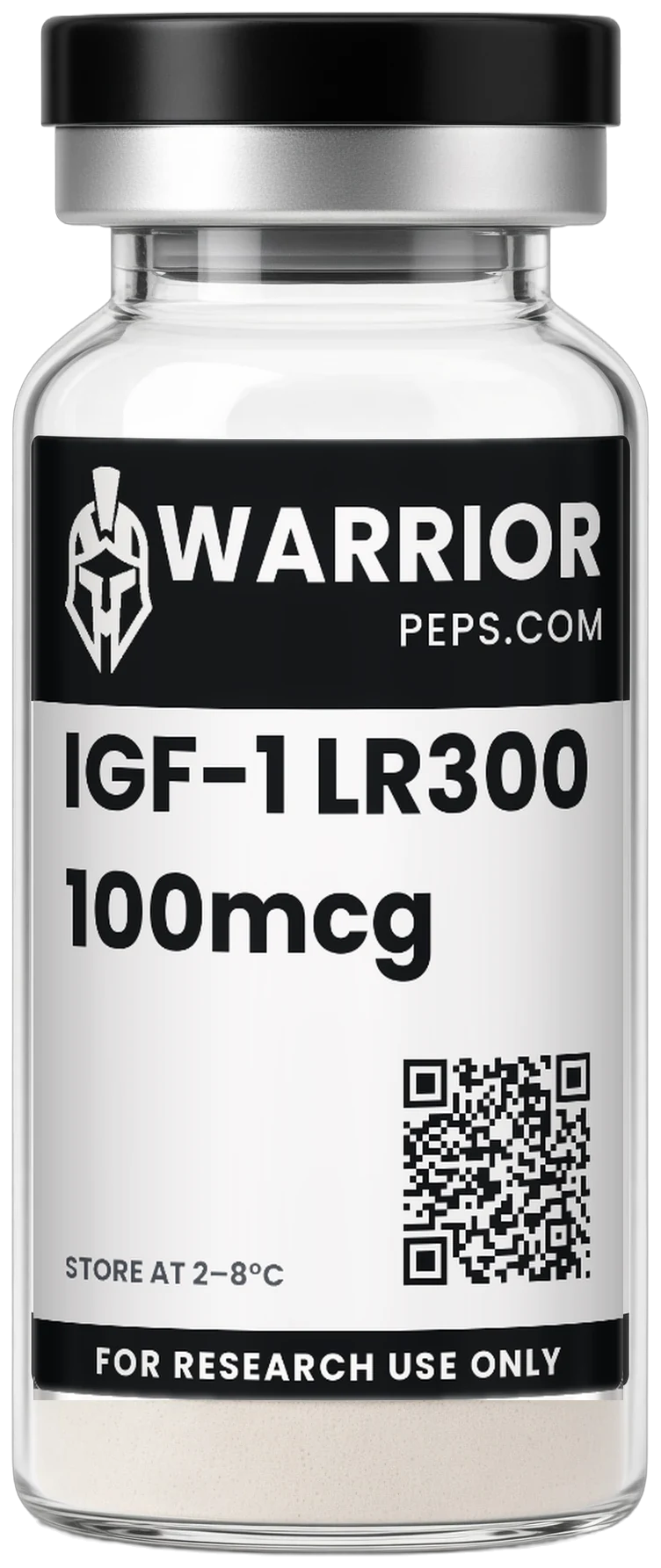
What IGF-1 LR300 is, in plain English.
This compound is an 83-amino-acid analogue of IGF-1, the 70-amino-acid growth factor the liver produces in response to growth hormone. Two changes define it: a 13-residue extension at the N-terminus and an arginine in place of the glutamate at position 3 — the 'R3' — which together stop it binding the IGF-binding proteins that hold natural IGF-1 in circulation. That is why it stays active far longer in cell-culture work, where it has been a standard laboratory reagent for decades. It is commonly researched for its role in cell growth, protein synthesis and glucose metabolism, and in muscle and tissue-repair models. Supplied as 100mcg of freeze-dried powder per vial — the smallest fill in the range — for reconstitution with bacteriostatic water; store at 2–8°C.